— Case Study · Internal Product · 2026
LineFlow.
AI enabled open demand intelligence for global product lines.
Potential Value Unlocked
$80M
in missed business
ROLE
UX Desing, Product, Delivery
Team
Agriculture, Commodities, Trading
Toolkit
Figma Make, GitHub, Jira, Codex
The challenge
Could we turn fragmented data and inconsistent country-level processes into a clearer decision-support experience for commercial and operational teams?
When I joined, the team had spent three months building. Requirements lived in Teams chats, decisions were made on instinct, and three separate pages pulled in different directions. Users weren't seeing the value.
My first priority was to bring the team back to the problem — before designing a single new screen.
Goal 01
Understand demand
Build an AI-enabled tool that shows where demand exists, what's being missed, and where action is needed.
Goal 02
Unlock value
Use structured data and dashboards to surface missed business opportunities, fast.
Goal 03
Increase transparency
Help teams see opportunity across origin, freight, and destination in one place.
One person, three roles
AI is changing product roles. Designers are spending more time at problem solving, defining the product scope, shape the data strategy, and guide delivery.
When I joined, the team had spent three months building. Requirements lived in Teams chats, decisions were made on instinct, and three separate pages pulled in different directions. Users weren't seeing the value.
My first priority was to bring the team back to the problem, before designing a single new screen.
Product Manager
Turning business needs into something the team could build — how data is collected, used and shared; where processes differ by country; what users need to input.
UX
Designer
Defining how the product should feel, understanding user needs, pain points. Designing workflows, dashboards for open-demand insight, and making AI feel useful and easy to adopt.
Delivery
Lead
Keeping the project moving — a user-driven roadmap, alignment across business, data and dev, and a focused country case study before scaling.
Starting point
Three months in (without me) the direction was unclear. Three pages, different assumptions, and no product strategy connecting the work to user needs or business value.
So instead of refining what existed, I asked one question: are we solving the right problem? Research said no. The best next step wasn't to keep adjusting the pages — it was to remove the noise and refocus the product.
Process
I didn't start with AI. I started with the problem, the users, and the business context — then used AI to move faster while staying aligned to the existing ecosystem.
01
Audit what exists
Pulled apart the app, the requirements and the assumptions behind all three pages — what got built, why, and whether anyone actually needed it.
02
Align - the north star
Got everyone in a room and agreed the direction, the value proposition, and how decisions actually get made.
03
Reframe the problem
Translated the Product Owner's years of business know-how into one sharp focus: open demand and missed business.
04
Research how users work
Sat down with real users — how they spot demand today, which tools they trust, and where decisions quietly die.
05
Enable short-term solutions
Started capturing data in a tool users already had — buying visibility now instead of waiting for the perfect system.
06
Think long term requirements
Wired business need → user need → requirement → dev work into a clear doc and Jira stories anyone could follow.
07
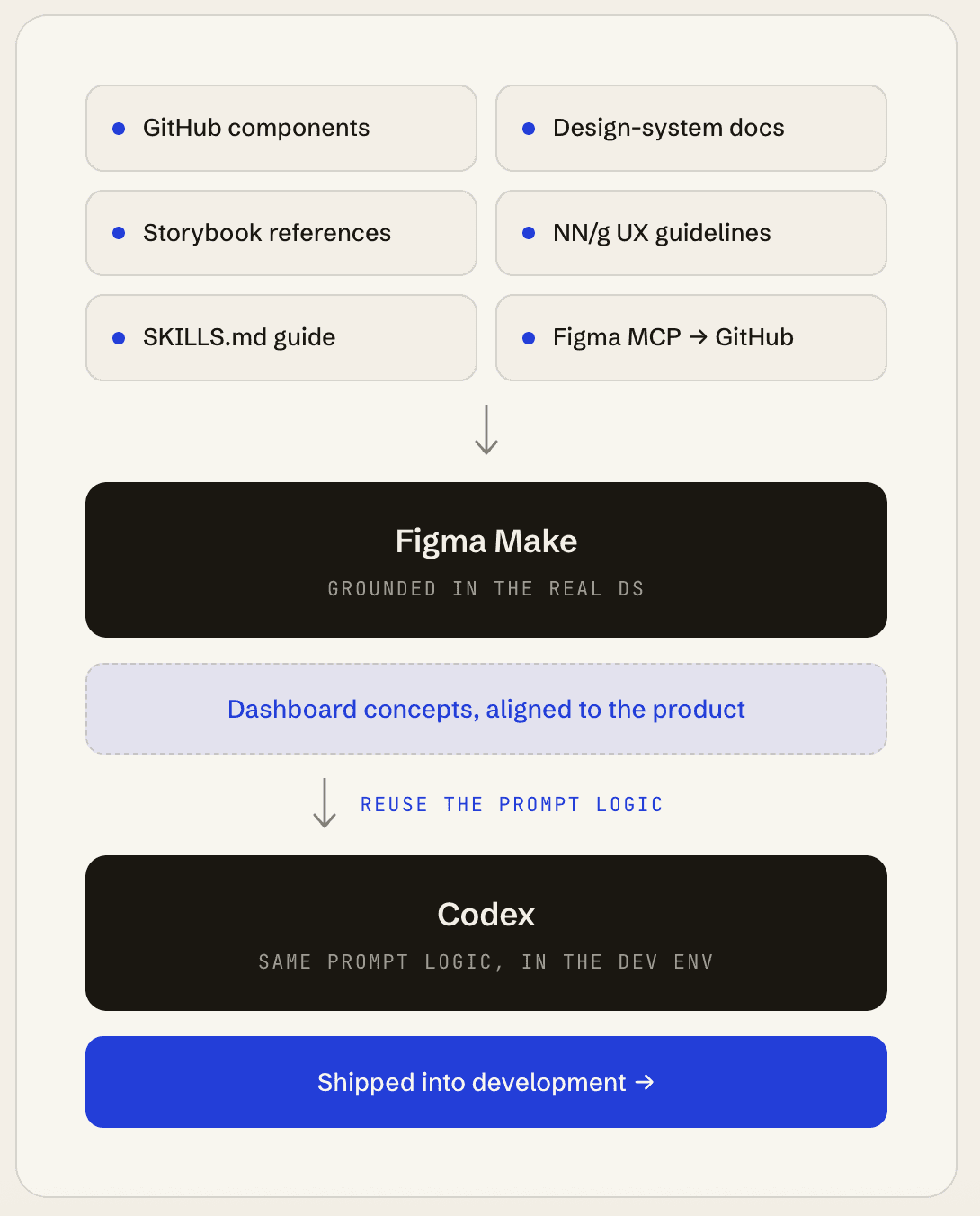
Design the dashboard
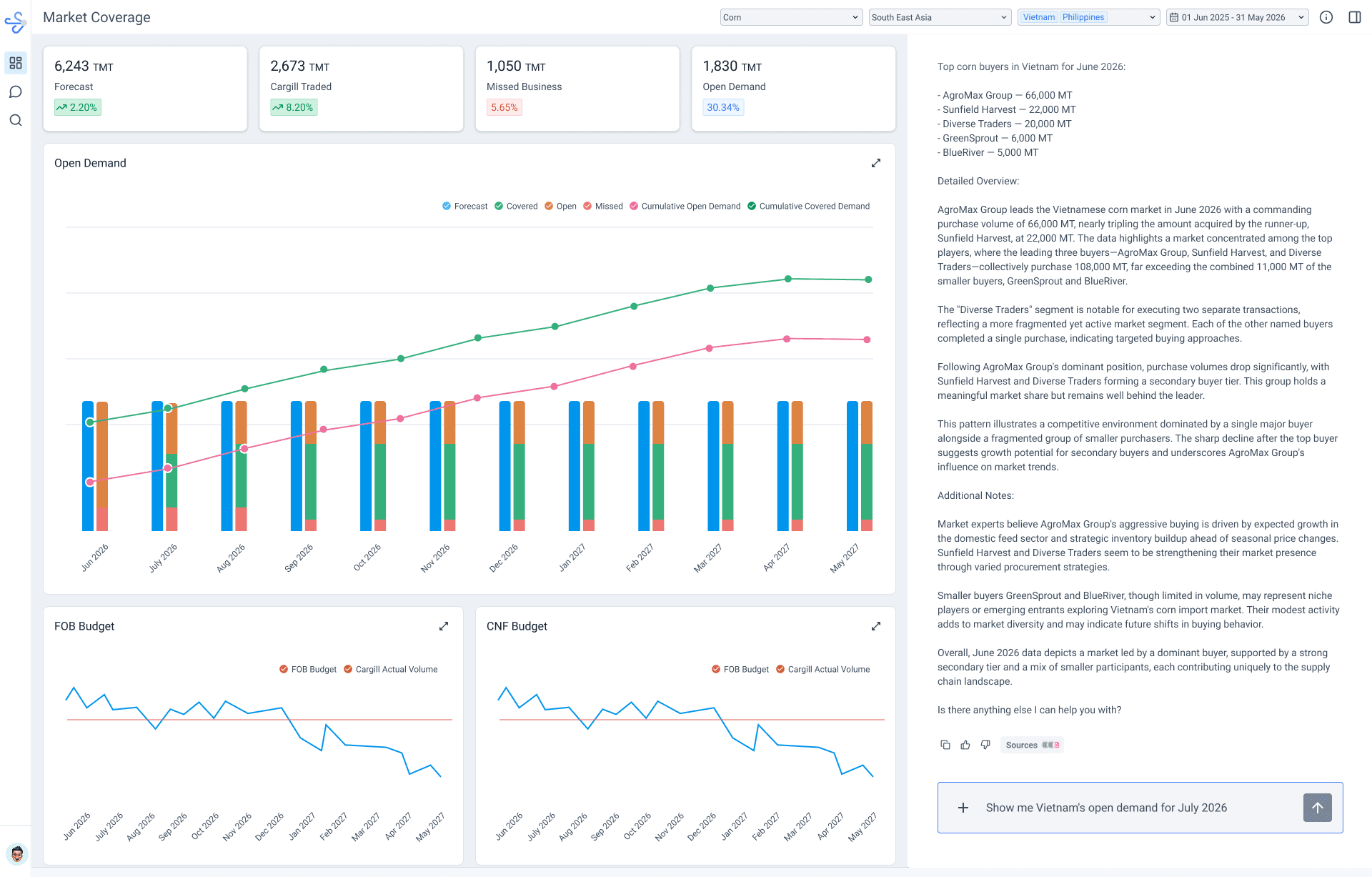
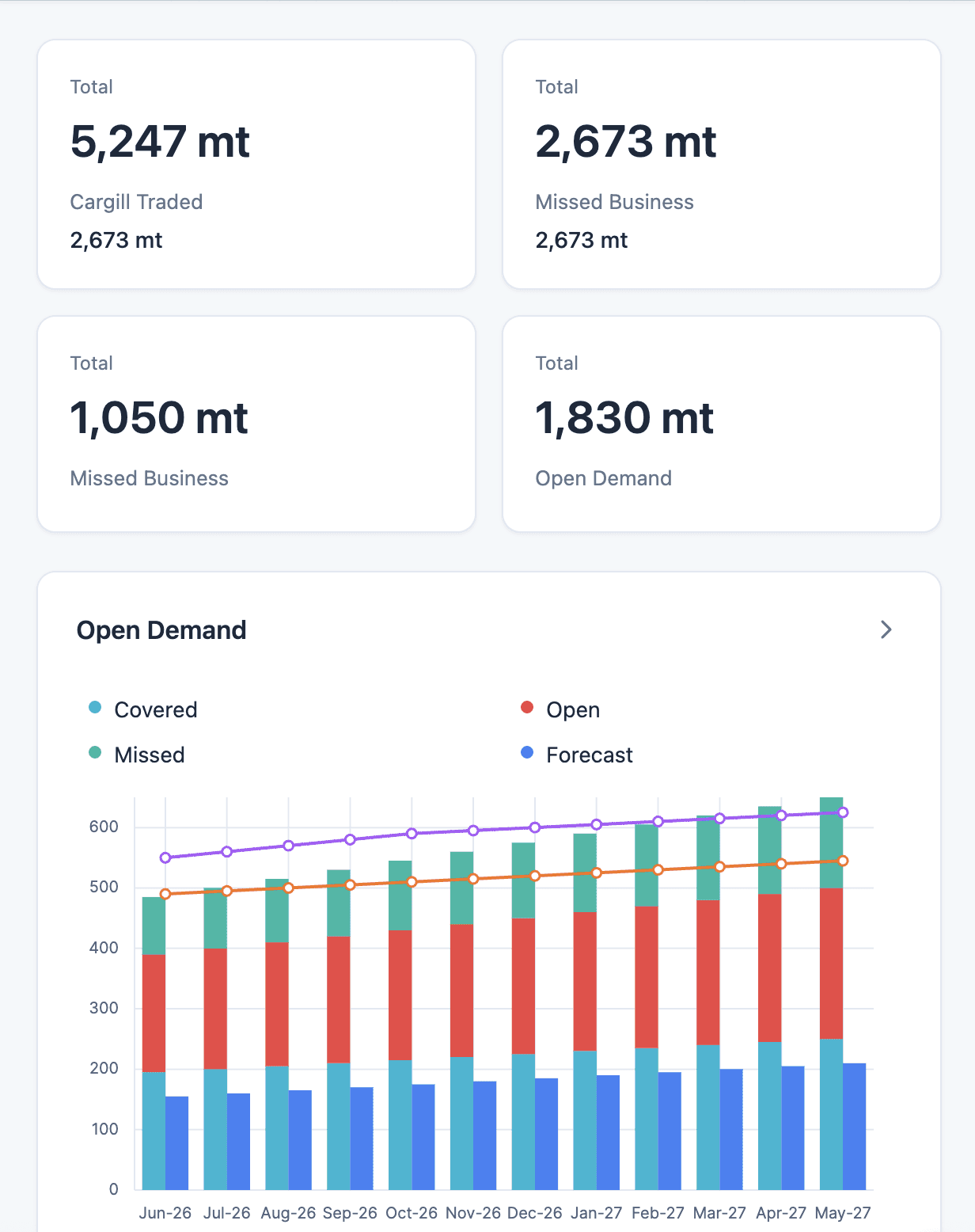
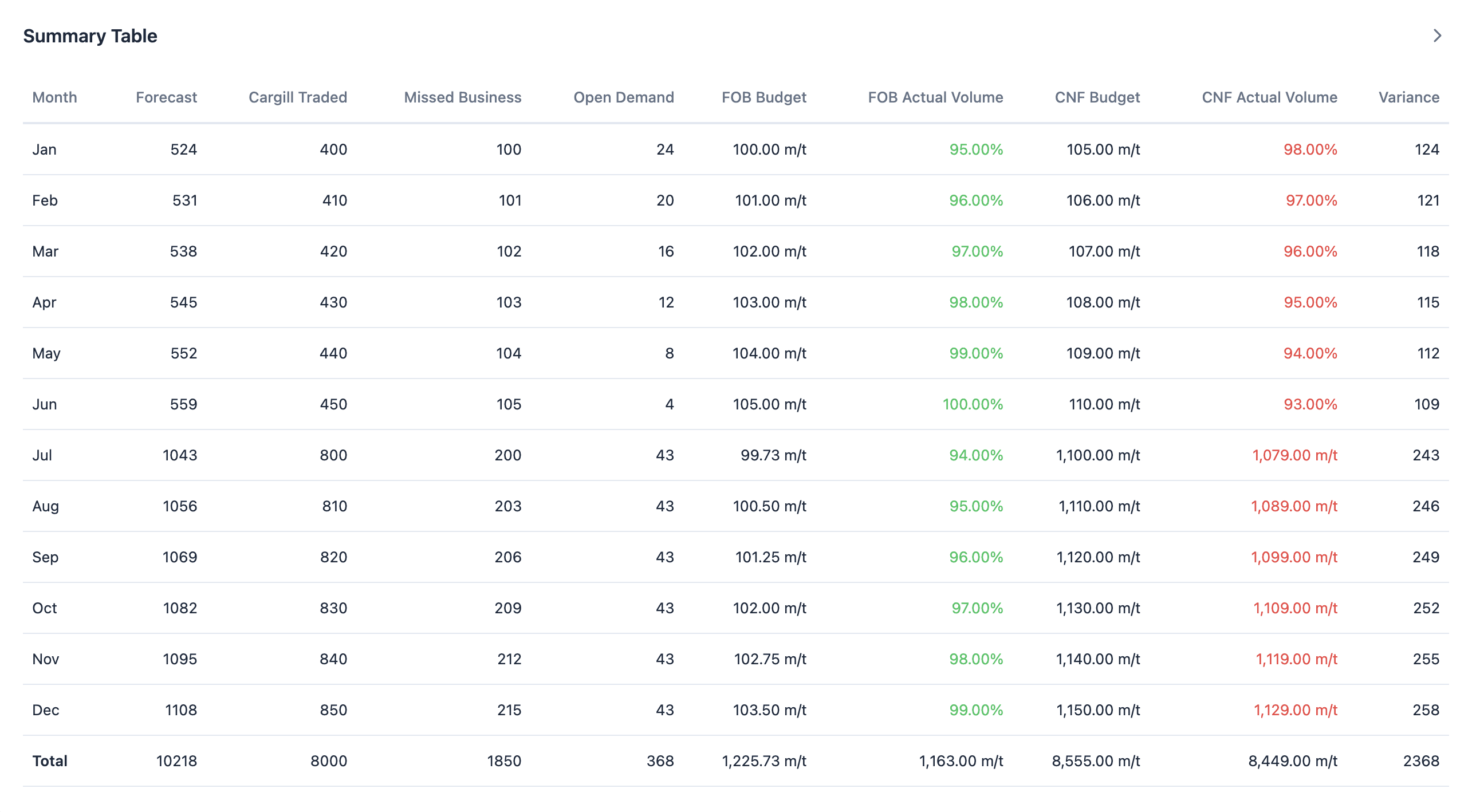
Designed around decisions, not decoration — open demand and missed business, front and centre.
08
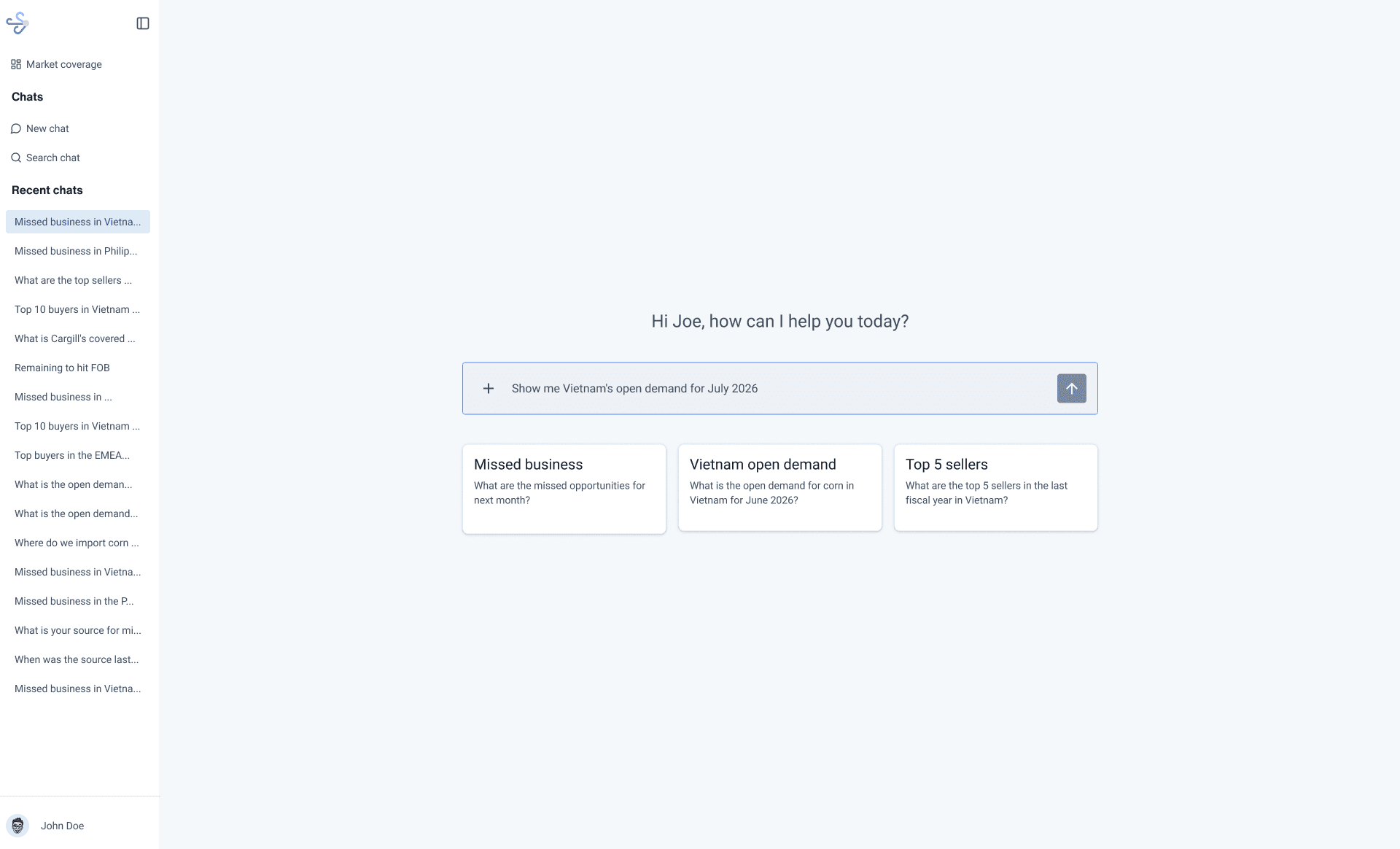
Shape the AI experience
Built the AI alongside it — data quality, availability and trust first, no magic-layer hand-waving.
09
Test learn scale
Testing with stakeholders now; user testing as the data matures — today's job vs. the AI-supported one
Direction
A view built to answer four questions: where is open demand, what business are we missing, which product lines need attention, and what can users act on next.
Key product decisions
CUT
Remove before adding
The team had built pages that weren't solving the right problem. Instead of improving them, we removed noise and focused on the core value.
FOCUS
Start with one country
Rather than solving for every country at once, we ran one country as a case study — learning at a smaller scale before expanding.
QUALITY
Data quality first
AI and dashboards are only useful if the data can be trusted. The roadmap prioritises availability and consistency before scale.
TECH
Make AI practical
The AI experience is built around real business decisions — what's happening, where the opportunity is, what to do next — not abstract innovation.
Roadmap
While the team improves data availability and quality, I'm working with the Product Owner on the next steps.
01
Expand data availability beyond the first country
NOW
01
Define the AI interface and interaction model
NEXT
01
Shape the long-term data-collection strategy
RESEARCH
01
Run a workshop on collecting data without losing existing data
WORKSHOP
01
Turn the workshop outcome into quick Figma concepts
ACTIONABLES
01
Test the proposed workflow in dev with users
TESTING
Outcomes
From a fragmented app with unclear direction to a focused product initiative grounded in user research, business value and data strategy.
$80 M
Potential value in missed business by understanding open demand.
3 to 1
Complexity reduced, focus on what matters
8
Team members aligned on process and on the value proposition
— Case Study · Internal Product · 2026
LineFlow.
AI enabled open demand intelligence for global product lines.
Potential Value Unlocked
$80M
in missed business
ROLE
UX Desing, Product, Delivery
Team
Agriculture, Commodities, Trading
Toolkit
Figma Make, GitHub, Jira, Codex
The challenge
Could we turn fragmented data and inconsistent country-level processes into a clearer decision-support experience for commercial and operational teams?
When I joined, the team had spent three months building. Requirements lived in Teams chats, decisions were made on instinct, and three separate pages pulled in different directions. Users weren't seeing the value.
My first priority was to bring the team back to the problem — before designing a single new screen.
Goal 01
Understand demand
Build an AI-enabled tool that shows where demand exists, what's being missed, and where action is needed.
Goal 02
Unlock value
Use structured data and dashboards to surface missed business opportunities, fast.
Goal 03
Increase transparency
Help teams see opportunity across origin, freight, and destination in one place.
One person, three roles
AI is changing product roles. Designers are spending more time at problem solving, defining the product scope, shape the data strategy, and guide delivery.
When I joined, the team had spent three months building. Requirements lived in Teams chats, decisions were made on instinct, and three separate pages pulled in different directions. Users weren't seeing the value.
My first priority was to bring the team back to the problem, before designing a single new screen.
Product Manager
Turning business needs into something the team could build — how data is collected, used and shared; where processes differ by country; what users need to input.
UX
Designer
Defining how the product should feel, understanding user needs, pain points. Designing workflows, dashboards for open-demand insight, and making AI feel useful and easy to adopt.
Delivery
Lead
Keeping the project moving — a user-driven roadmap, alignment across business, data and dev, and a focused country case study before scaling.
Starting point
Three months in (without me) the direction was unclear. Three pages, different assumptions, and no product strategy connecting the work to user needs or business value.
So instead of refining what existed, I asked one question: are we solving the right problem? Research said no. The best next step wasn't to keep adjusting the pages — it was to remove the noise and refocus the product.
Process
I didn't start with AI. I started with the problem, the users, and the business context — then used AI to move faster while staying aligned to the existing ecosystem.
01
Audit what exists
Pulled apart the app, the requirements and the assumptions behind all three pages — what got built, why, and whether anyone actually needed it.
02
Align - the north star
Got everyone in a room and agreed the direction, the value proposition, and how decisions actually get made.
03
Reframe the problem
Translated the Product Owner's years of business know-how into one sharp focus: open demand and missed business.
04
Research how users work
Sat down with real users — how they spot demand today, which tools they trust, and where decisions quietly die.
05
Enable short-term solutions
Started capturing data in a tool users already had — buying visibility now instead of waiting for the perfect system.
06
Think long term requirements
Wired business need → user need → requirement → dev work into a clear doc and Jira stories anyone could follow.
07
Design the dashboard
Designed around decisions, not decoration — open demand and missed business, front and centre.
08
Shape the AI experience
Built the AI alongside it — data quality, availability and trust first, no magic-layer hand-waving.
09
Test learn scale
Testing with stakeholders now; user testing as the data matures — today's job vs. the AI-supported one
Direction
A view built to answer four questions: where is open demand, what business are we missing, which product lines need attention, and what can users act on next.
Key product decisions
CUT
Remove before adding
The team had built pages that weren't solving the right problem. Instead of improving them, we removed noise and focused on the core value.
FOCUS
Start with one country
Rather than solving for every country at once, we ran one country as a case study — learning at a smaller scale before expanding.
QUALITY
Data quality first
AI and dashboards are only useful if the data can be trusted. The roadmap prioritises availability and consistency before scale.
TECH
Make AI practical
The AI experience is built around real business decisions — what's happening, where the opportunity is, what to do next — not abstract innovation.
Roadmap
While the team improves data availability and quality, I'm working with the Product Owner on the next steps.
01
Expand data availability beyond the first country
NOW
01
Define the AI interface and interaction model
NEXT
01
Shape the long-term data-collection strategy
RESEARCH
01
Run a workshop on collecting data without losing existing data
WORKSHOP
01
Turn the workshop outcome into quick Figma concepts
ACTIONABLES
01
Test the proposed workflow in dev with users
TESTING
Outcomes
From a fragmented app with unclear direction to a focused product initiative grounded in user research, business value and data strategy.
$80 M
Potential value in missed business by understanding open demand.
3 to 1
Complexity reduced, focus on what matters
8
Team members aligned on process and on the value proposition
— Case Study · Internal Product · 2026
LineFlow.
AI enabled open demand intelligence for global product lines.
Potential Value Unlocked
$80M
in missed business
ROLE
UX Desing, Product, Delivery
Team
Agriculture, Commodities, Trading
Toolkit
Figma Make, GitHub, Jira, Codex
The challenge
Could we turn fragmented data and inconsistent country-level processes into a clearer decision-support experience for commercial and operational teams?
When I joined, the team had spent three months building. Requirements lived in Teams chats, decisions were made on instinct, and three separate pages pulled in different directions. Users weren't seeing the value.
My first priority was to bring the team back to the problem — before designing a single new screen.
Goal 01
Understand demand
Build an AI-enabled tool that shows where demand exists, what's being missed, and where action is needed.
Goal 02
Unlock value
Use structured data and dashboards to surface missed business opportunities, fast.
Goal 03
Increase transparency
Help teams see opportunity across origin, freight, and destination in one place.
One person, three roles
AI is changing product roles. Designers are spending more time at problem solving, defining the product scope, shape the data strategy, and guide delivery.
When I joined, the team had spent three months building. Requirements lived in Teams chats, decisions were made on instinct, and three separate pages pulled in different directions. Users weren't seeing the value.
My first priority was to bring the team back to the problem, before designing a single new screen.
Product Manager
Turning business needs into something the team could build — how data is collected, used and shared; where processes differ by country; what users need to input.
UX
Designer
Defining how the product should feel, understanding user needs, pain points. Designing workflows, dashboards for open-demand insight, and making AI feel useful and easy to adopt.
Delivery
Lead
Keeping the project moving — a user-driven roadmap, alignment across business, data and dev, and a focused country case study before scaling.
Starting point
Three months in (without me) the direction was unclear. Three pages, different assumptions, and no product strategy connecting the work to user needs or business value.
So instead of refining what existed, I asked one question: are we solving the right problem? Research said no. The best next step wasn't to keep adjusting the pages — it was to remove the noise and refocus the product.
Process
I didn't start with AI. I started with the problem, the users, and the business context — then used AI to move faster while staying aligned to the existing ecosystem.
01
Audit what exists
Pulled apart the app, the requirements and the assumptions behind all three pages — what got built, why, and whether anyone actually needed it.
02
Align - the north star
Got everyone in a room and agreed the direction, the value proposition, and how decisions actually get made.
03
Reframe the problem
Translated the Product Owner's years of business know-how into one sharp focus: open demand and missed business.
04
Research how users work
Sat down with real users — how they spot demand today, which tools they trust, and where decisions quietly die.
05
Enable short-term solutions
Started capturing data in a tool users already had — buying visibility now instead of waiting for the perfect system.
06
Think long term requirements
Wired business need → user need → requirement → dev work into a clear doc and Jira stories anyone could follow.
07
Design the dashboard
Designed around decisions, not decoration — open demand and missed business, front and centre.
08
Shape the AI experience
Built the AI alongside it — data quality, availability and trust first, no magic-layer hand-waving.
09
Test learn scale
Testing with stakeholders now; user testing as the data matures — today's job vs. the AI-supported one
Direction
A view built to answer four questions: where is open demand, what business are we missing, which product lines need attention, and what can users act on next.
Key product decisions
CUT
Remove before adding
The team had built pages that weren't solving the right problem. Instead of improving them, we removed noise and focused on the core value.
FOCUS
Start with one country
Rather than solving for every country at once, we ran one country as a case study — learning at a smaller scale before expanding.
QUALITY
Data quality first
AI and dashboards are only useful if the data can be trusted. The roadmap prioritises availability and consistency before scale.
TECH
Make AI practical
The AI experience is built around real business decisions — what's happening, where the opportunity is, what to do next — not abstract innovation.
Roadmap
While the team improves data availability and quality, I'm working with the Product Owner on the next steps.
01
Expand data availability beyond the first country
NOW
01
Define the AI interface and interaction model
NEXT
01
Shape the long-term data-collection strategy
RESEARCH
01
Run a workshop on collecting data without losing existing data
WORKSHOP
01
Turn the workshop outcome into quick Figma concepts
ACTIONABLES
01
Test the proposed workflow in dev with users
TESTING
Outcomes
From a fragmented app with unclear direction to a focused product initiative grounded in user research, business value and data strategy.
$80 M
Potential value in missed business by understanding open demand.
3 to 1
Complexity reduced, focus on what matters
8
Team members aligned on process and on the value proposition